
Whoa!
I remember the first time I saw a transaction simulation in a wallet and thought, “Finally.” It felt like a tiny bit of sanity in the chaotic UX of DeFi. My gut said this mattered more than flashy token lists, and that instinct proved useful later on when things got messy. Initially I thought a simulation was a gimmick, but then I watched it block a costly gas misestimate and my view shifted—fast and hard.
Seriously?
Yes—really. The thing is, DeFi users are now juggling chains, gas tokens, and nuanced approvals, and I’ve messed up more than once. Somethin’ about a UI that explains outcomes before you sign just clicks. I’m biased, sure, but this part bugs me in other wallets, and Rabby feels like a sensible response.
Okay, so check this out—
I spent a week trying Rabby out across Ethereum, BSC, Arbitrum, and a less-traveled L2 that I won’t name because it still felt experimental. The onboarding was simple enough for a power user to skip the tutorial but clear enough that I didn’t rage-quit. On one hand the extension avoids clutter, though actually it still exposes deeper settings when you need them. My instinct said the devs talked to traders, not marketers.
Here’s the thing.
Rabby’s transaction simulation pipeline gives you a readable summary of what will happen, including revert reasons and approval flows, and it surfaces potential slippage and gas impacts in ways that feel directly actionable rather than abstract. That live preview saved me from signing a contract that would have left my token stuck behind a bad permit flow, which is something I don’t love repeating. I could nitpick the phrasing on a couple of modal dialogs—very very small things—but overall the clarity is a real win for multi-chain folks who move fast and need to move smart.
Hmm…
My instincts aren’t always right. Initially I thought that a simulation was only useful for rookies. Actually, wait—let me rephrase that: I assumed experienced traders would skip confirmations, relying on mental models and scripts. Then I realized even scripts fail when a contract update changes a function signature or when mempool frontrunners bork your expected path. On one hand this is annoying, though on the other hand having a human-readable before/after is like a safety harness for your funds.
Trust but verify.
Rabby gives you that verification step. It parses calls and shows decoded calldata, which is rare in browser wallets unless you’re using a dev tool. That matters when you need to confirm a complex swap or a zap that hits three pools, because seeing the path prevents surprises. I can’t promise it catches everything, and I’m not 100% sure every edge case is covered, but it raises the bar for on-chain transparency.
Whoa, again.
Security is more than a checklist. Wallets should help you make fewer mistakes while also protecting you from active adversaries. Rabby layers anti-phishing heuristics, chain-aware permission management, and in-extension contract inspection, which together reduce surface area for common attacks. Personally I like that it groups approvals by spender and shows cumulative exposure, since that shaped how I manage approvals across dozens of dApps. Oh, and by the way, the UI lets you revoke approvals without leaving the extension, which is a small feature that feels huge after a bad deadline scramble.
Hmm—some nuance.
On the other hand, automation can lull users into complacency, and even the clearest simulation might be misunderstood by someone in a hurry. My advice: use the simulation as part of a habit loop—check it, read the key lines, compare gas estimates—don’t treat it like a guarantee. There’s no substitute for careful review, and Rabby is a tool to make that review easier, not to replace your judgment.
Okay, a practical note.
I tried the extension on Chrome and Brave, and the install footprint was modest. Connecting to a Ledger device worked smoothly, though it required that extra step in the app which is typical and expected. Performance felt snappy on page transitions, but there were a couple moments where network queries for token metadata lagged and the UI showed placeholders—minor, but noticeable when you’re batching trades. I’m not thrilled about edge-case metadata gaps, but the team pushes updates fairly regularly so fixes tend to land within a few releases.
Here’s my mental model now:
Rabby is built for people who treat a wallet like an instrument rather than a passive container, and it plays well when you’re doing swaps, bridging, and tactical approvals across chains. It isn’t the prettiest wallet in the store, and it’s not trying to be; instead it focuses on giving you clear decisions before you sign and that’s an underrated design choice. For power users who care about risk reduction, that tradeoff is a net positive.
Check this out—
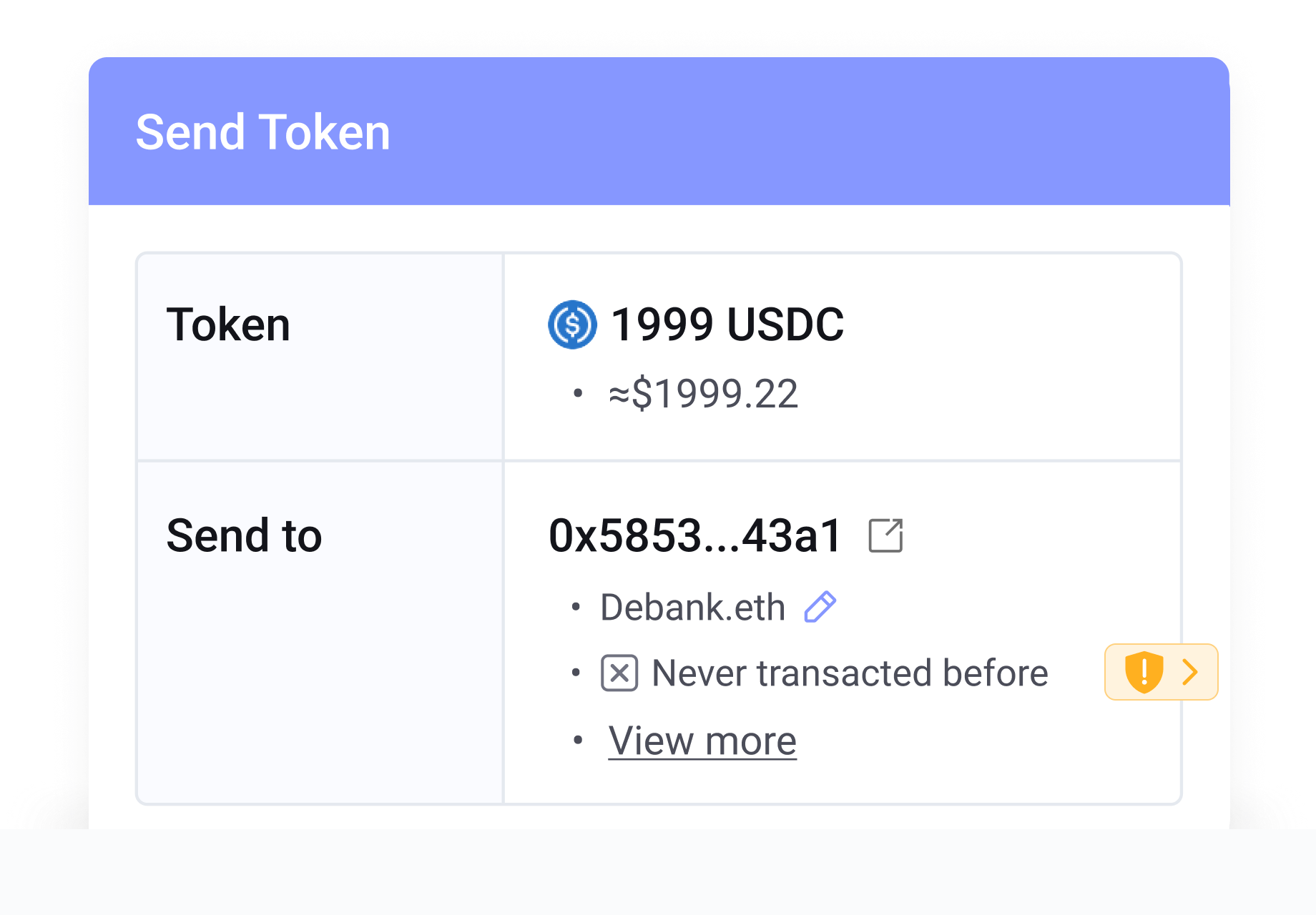
The screenshot above shows a typical simulation in Rabby where calldata is decoded and potential reverts are highlighted, making it easier to decide whether to proceed. That moment of “oh, I see why this will fail” is exactly what we’re after. The app surfaces revert reasons and shows which step will fail in multi-step transactions, and that can prevent a wasted approval or an unnecessary refund chase later on.
Where Rabby Really Helps (and Where I Still Worry)
I’ll be honest: it simplifies a lot of cognitive load. When you’re switching chains and juggling multiple wallets, having a consistent simulation UI means one less domain to master per chain. On the flip side, sophisticated adversaries will adapt, and some exploits are inherently out of scope for a client-side simulator because they involve off-chain collusion or oracle manipulation. Initially I thought that client-side tools could defang many attacks, but then I realized their limits—so treat them as mitigation layers, not magic shields.
Something else bugs me.
Rabby’s import and account management is powerful, but it can overwhelm new users (and sometimes even experienced ones when managing many accounts). The UX assumes a baseline competence which is fine for the audience here, though I wish certain contextual tips were a tad clearer for intermediate users. Still, for power users this is a feature not a bug—more control than hand-holding is often exactly what we want.
Buy-in matters.
If you want to take advantage of Rabby’s strengths, adopt a workflow: connect selectively, read simulations, revoke approvals, keep hardware devices for large balances, and use separate accounts for bridging vs. trading. It’s not rocket science, but it’s disciplined. And if that sounds strict—I get it—it’s also how you avoid dumb losses in a world where mistakes are expensive.
One final practical thing.
I recommend giving Rabby a spin for a week while keeping small balances for experimentation. Try simulated trades, test revocations, and connect a hardware wallet for some operations. If you like the workflow, move more funds in stages. The learning curve is short for experienced folks and the payoff—fewer surprises—is immediate.
Curious?
If you want to explore Rabby yourself, start with this official page: rabby wallet. I’m not saying it’s flawless, but it’s pragmatic and built with multi-chain power users in mind, and that matters.
FAQ
Is Rabby safe for large balances?
Use hardware wallets and segregate funds. Rabby supports Ledger integration and account separation, which helps, though no client can make you invincible—practice layered security and adopt a cautious migration plan.
Does transaction simulation catch MEV front-running?
Not directly. Simulations reveal expected call flows and reverts, but front-running and MEV are network-level risks that need separate mitigations like private relays, gas strategies, or MEV-aware routing—Rabby helps with visibility but isn’t a full MEV solution.
Can I revoke approvals within the extension?
Yes. Revoking is streamlined inside the UI, which is handy for cleaning up long-lived allowances without hopping between dApps or external sites. Do it regularly—seriously, make it a habit.